
Unidad de tamaño
A level control valve automatically manages the water level in a reservoir, storage tank, water tower, or cistern. It opens to allow filling when the water level drops below the pre-set point, and closes when the level is reached – preventing overflow. The two main types are altitude valves (pilot-operated, hydraulic head sensing) and float valves (mechanical or hydraulic float-actuated).
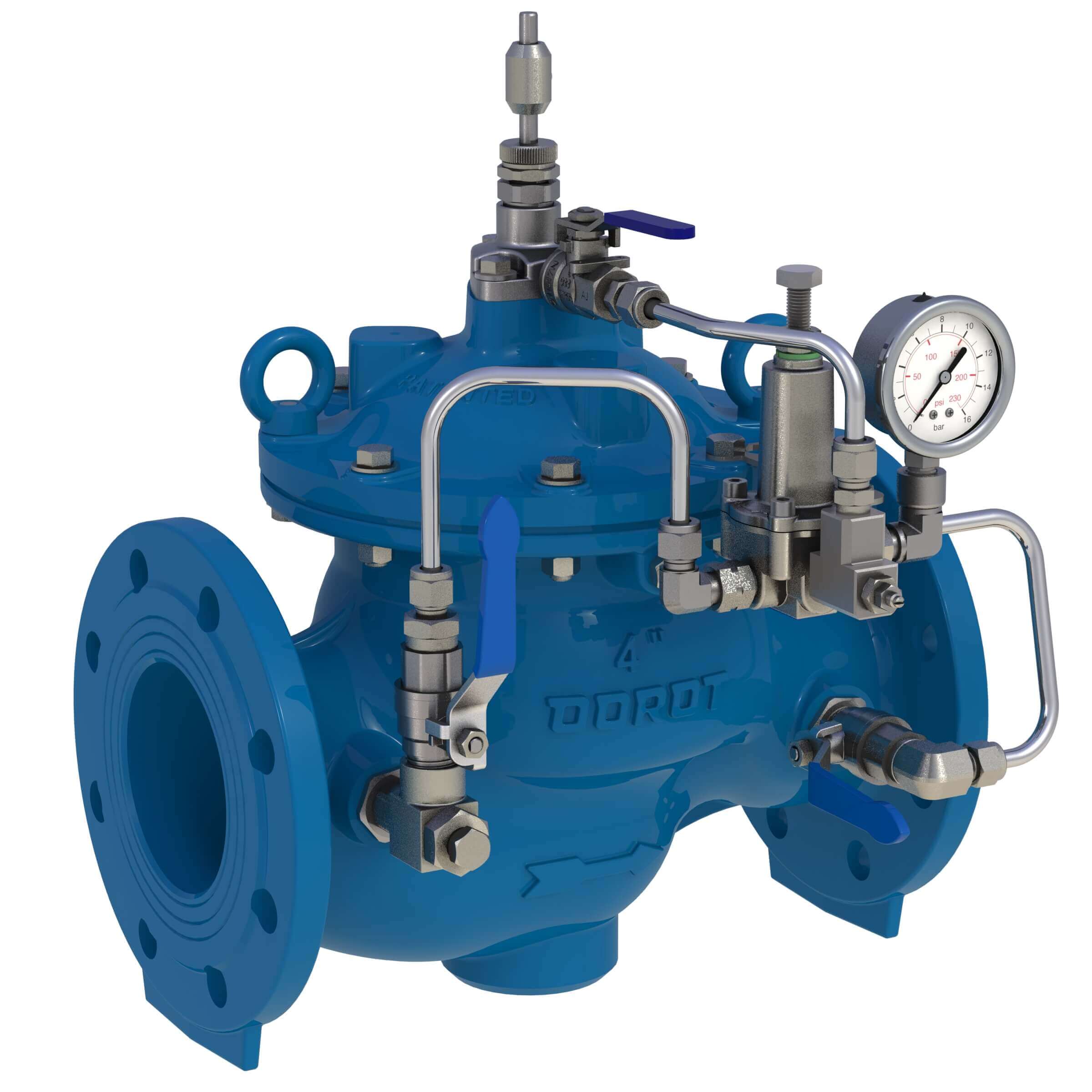
An altitude valve is a pilot-operated hydraulic control valve that fills a water tower, elevated tank, or service reservoir. The pilot senses the hydrostatic head (water column pressure) from the reservoir – when the level drops below the setpoint, the pilot opens the main valve to allow filling. When the water rises to the set altitude, the pilot detects the increased head and closes the main valve. Unlike a float valve, no mechanical float is required inside the reservoir itself.
An altitude valve senses water level via hydraulic pressure (the weight of the water column above the sensing point), without any mechanical connection inside the reservoir. A float valve uses a physical float that rises and falls with the water surface, mechanically or hydraulically actuating the valve. Altitude valves are preferred for large municipal reservoirs and water towers due to their accuracy and reliability at high flow rates. Float valves are common in smaller tanks, cisterns, and supplementary control applications
A two-way altitude valve both fills a reservoir from the supply main and allows the reservoir to discharge by gravity into the distribution system when demand exceeds supply. This is critical for emergency storage reservoirs and elevated tank supply systems where the same valve must serve both the fill and the discharge function. Single-direction (fill-only) altitude valves are used where a separate outlet line handles distribution.
Yes. DOROT S300 and S500 series valves can be configured with both an altitude (level control) pilot and a pressure reducing pilot simultaneously. This is standard practice in reservoir inlet applications where the high-pressure supply main must also be reduced to a safe level before entering the storage tank or distribution system connected to it.
The setpoint is adjusted via the pilot valve spring tension or by setting the sensing line connection point at the desired maximum water level. The pilot senses the hydrostatic pressure at the setpoint elevation – when that pressure is reached (meaning the tank is full to that level), the pilot closes the main valve. Aquestia recommends setpoint adjustment and commissioning by a qualified engineer.
Float valves are used in smaller tanks, rooftop cisterns, livestock water troughs, residential pressure tanks, and as supplementary control alongside altitude valves in larger systems. They are also used in irrigation storage tanks, industrial process vessels, and high-rise building cold water storage tanks where a simple, low-cost fill-stop mechanism is sufficient.
Pilot-operated level control valves (DOROT, OCV Model 8000) require annual inspection of pilot components, sensing line flushing, and setpoint verification. The rubber diaphragm in DOROT valves is replaceable in-line without removing the valve from the pipeline. Mechanical float valves require periodic inspection of the float for corrosion or damage and the linkage mechanism for wear.
Overhead storage tanks (OHTs) and ground-level service reservoirs are a fundamental part of water supply infrastructure across Indian cities and towns – from municipal corporation systems in metros to rural Jal Jeevan Mission schemes. For Indian applications, altitude valves and float valves must handle high inlet pressures, wide temperature ranges, and the intermittent (non-continuous) supply patterns common across Indian water networks, where tanks fill during supply hours and distribute throughout the day. OCV Model 8000 altitude valves and DOROT level control valves are widely used in Indian municipal reservoirs for their reliability under these conditions. They meet materials standards referenced in BIS specifications and international standards accepted by CPWD, JNNURM, and state PWD departments. Aquestia India provides sizing, supply, and technical support for OHT and service reservoir projects across the country.